
How Long Do Well Pressure Tanks Last?
A well pressure tank helps keep water pressure steady throughout your home. It also prevents the well pump from turning on every time someone opens a faucet, flushes a toilet, or runs an appliance.
But how long do well pressure tanks last?
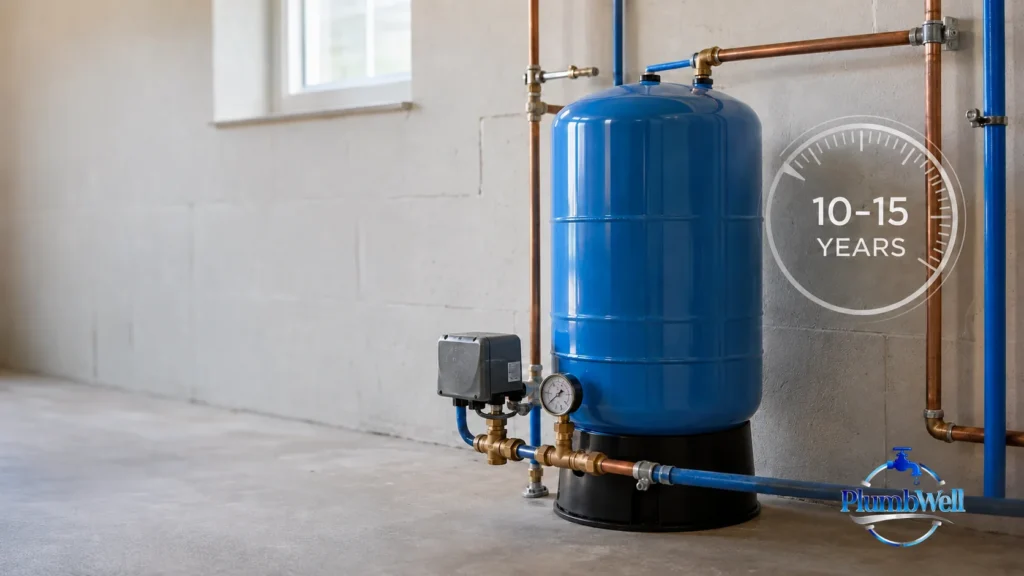
Most well pressure tanks last approximately 10 to 15 years. The actual lifespan depends on the type of tank, installation quality, water conditions, tank size, pump operation, and maintenance.
Some tanks continue working beyond 15 years, while others fail much sooner. Recognizing the warning signs can help you avoid inconsistent water pressure, pump damage, and an unexpected loss of water.
The condition of the tank should be considered alongside the pump, pressure switch, piping, electrical controls, and water quality because each part affects how the overall system operates.
PlumbWell provides professional well pressure tank inspection, repair, and replacement services in New Jersey for homeowners experiencing pressure problems or other well-system concerns.
What Does a Well Pressure Tank Do?
A well pressure tank stores water under pressure so the plumbing system can deliver small amounts of water without immediately starting the pump.
When you open a faucet, compressed air inside the tank pushes stored water into the plumbing system. As the pressure drops to the pressure switch’s cut-in setting, the switch starts the pump. The pump refills the tank until the system reaches its cut-out pressure and then shuts off.
A properly functioning pressure tank helps:
- Maintain consistent water pressure
- Reduce how often the well pump starts
- Protect the pump motor from unnecessary wear
- Provide a reserve of pressurized water
- Reduce pressure surges inside the plumbing system
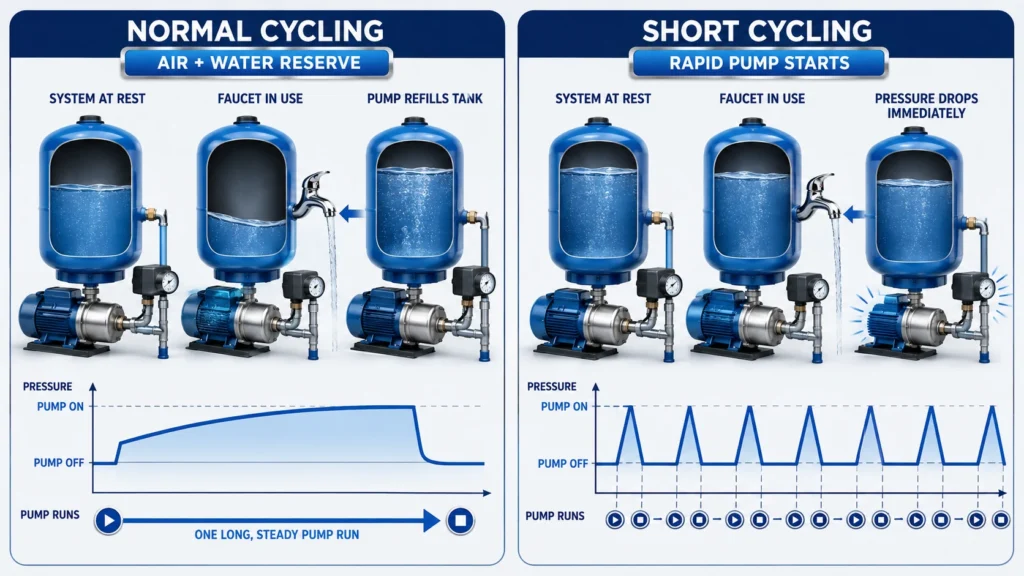
Without enough usable storage inside the tank, the pump may turn on and off every few seconds. This is known as short cycling and can substantially shorten the pump’s life.
A larger tank does not automatically increase water pressure, but a properly sized tank gives the pump enough run time during each cycle.
How Long Do Well Pressure Tanks Last by Type?
Although 10 to 15 years is a common lifespan, the tank design can affect how long it lasts.
Bladder Pressure Tanks
A bladder tank uses a flexible bladder to hold the water while pressurized air surrounds it. Because the water does not directly contact the steel tank walls, this design is generally less vulnerable to internal corrosion than older air-over-water tanks. The bladder can eventually stretch, tear, or separate from its mounting.
Diaphragm Pressure Tanks
A diaphragm tank uses a flexible membrane to separate the air and water. It can provide many years of service when correctly sized and installed, but a damaged diaphragm usually requires tank replacement.
Air-Over-Water Pressure Tanks
Older well systems may use a galvanized steel tank in which air and water share the same space. Air can gradually dissolve into the water and cause the tank to become waterlogged. Older steel tanks may also develop internal corrosion, pinhole leaks, or rust around fittings and seams.
What Affects the Lifespan of a Well Pressure Tank?
The answer to how long do well pressure tanks last depends on more than age. Several conditions can shorten the tank’s life and place additional stress on the rest of the well system.
Tank Size and Installation
The pressure tank must be correctly sized for the pump and the property’s water demand. An undersized tank provides less drawdown—the usable water available before the pump starts—which can cause frequent cycling.
Correct sizing is based on factors such as the pump’s flow rate and the minimum recommended pump run time. The goal is to reduce unnecessary starts while still meeting the home’s water demand.
The tank’s air precharge must also match the pressure switch settings. Incorrect precharge, damaged fittings, leaks, or improper installation can produce uneven pressure and unnecessary wear.
Untreated Water Quality Problems
Sediment, iron, manganese, hardness minerals, and acidic water can stress the tank, pump, pressure switch, valves, fittings, and household plumbing. Sediment contributes to wear and clogging, mineral deposits can build up inside equipment, and acidic water can corrode metal components.
A properly selected water treatment system can help address these conditions. Depending on professional test results, treatment may include sediment or iron filtration, a water softener, an acid neutralizer, or other equipment suited to the property’s water chemistry.
Treatment should be based on actual test results rather than visible symptoms alone. Correcting the underlying water-quality problem can help protect the tank, pump, controls, and connected plumbing.
Pump Cycling, Moisture, and Maintenance
Every pump start creates wear on the motor and electrical components. A failing pressure tank may make the pump start dozens of times in a short period. Damp basements, crawl spaces, nearby leaks, and ignored maintenance problems can also lead to external corrosion or equipment failure.
Signs Your Well Pressure Tank Is Bad
Understanding the signs your well pressure tank is bad can help you arrange service before the tank damages the pump or leaves your home without water.
One symptom does not always identify the exact failed component, so the tank, pump, switch, gauge, and piping should be evaluated together.
- Rapid pump cycling: The pressure switch clicks repeatedly or the pump starts whenever a small amount of water is used.
- Fluctuating water pressure: Pressure rises and falls noticeably while a faucet or shower is running.
- A tank that feels full: A tank that feels heavy from top to bottom or sounds solid when tapped may have lost its air cushion.
- Water from the air valve: This strongly suggests that the internal bladder or diaphragm has ruptured.
- Rust, corrosion, or leaks: Damp spots, pinhole leaks, or corrosion around the base, seams, fittings, or mounting points should not be ignored.
- Erratic gauge readings: A gauge that rises and falls rapidly may indicate short cycling or another control problem.
- Higher electricity use: A pump that starts too frequently may consume more power than normal.
Surface rust does not always mean immediate failure, but spreading corrosion, damp spots, or active leaks deserve prompt attention.
How to Tell If a Well Tank Is Waterlogged
A waterlogged pressure tank contains too much water and not enough compressed air. It cannot store and release water as designed, so the pump may start almost immediately after a faucet opens and run for only a few seconds at a time.
Other signs include repeated pressure-switch clicking, noticeable pressure changes, very little water before the pump starts, a tank that sounds solid near the top, or water coming from the air valve. Tapping the tank is only a basic observation and does not confirm the exact problem.
A healthy tank contains both compressed air and water, so its upper and lower portions should not normally sound or feel the same.
Checking the Tank’s Air Pressure
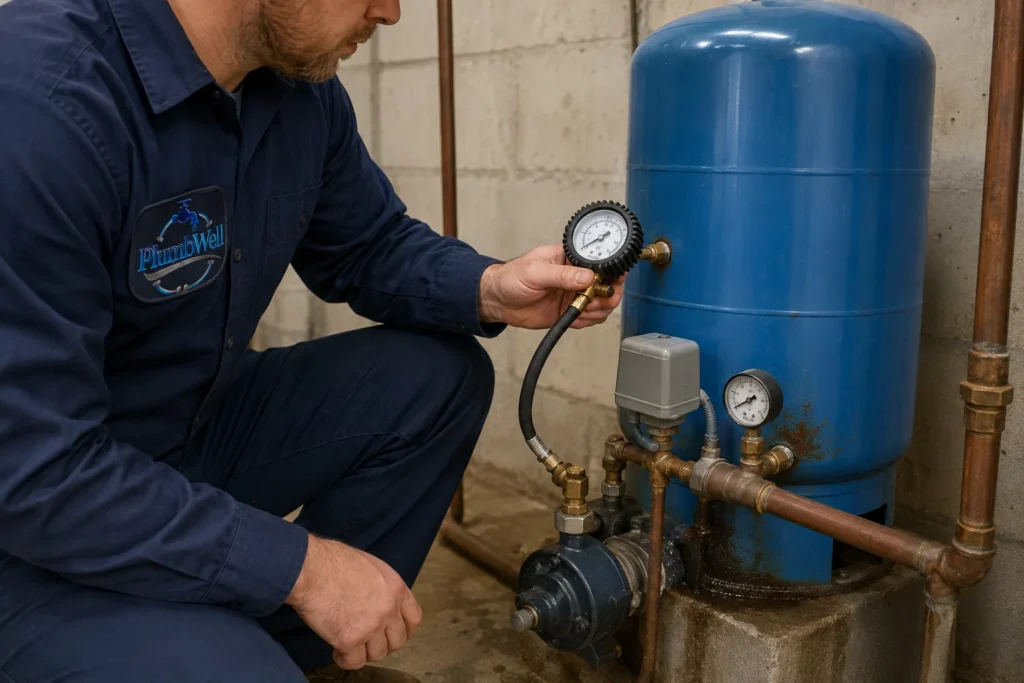
A technician can test the air precharge after turning off power to the pump, draining the system, and confirming the tank is empty. For many conventional systems, the precharge should be approximately 2 PSI below the pressure switch’s cut-in setting:
- 20/40 switch: approximately 18 PSI
- 30/50 switch: approximately 28 PSI
- 40/60 switch: approximately 38 PSI
The test will not be accurate while the system remains pressurized. Because well systems contain electrical equipment and pressurized components, homeowners unfamiliar with the equipment should have a qualified professional perform the test.
Can a Waterlogged Pressure Tank Be Repaired?
An older air-over-water tank may only need its air cushion restored or its air volume control repaired. A modern bladder or diaphragm tank may sometimes recover after correcting a depleted air charge, provided the internal membrane is intact.
If the bladder or diaphragm has ruptured, the tank generally needs replacement. Adding air may temporarily change the symptoms, but it will not repair a torn membrane. Water coming from the air valve is a strong indication of internal failure.
Repeated waterlogging can also point to a failing control, leaking fitting, or another system problem that should be corrected before the symptoms return.
Well Pump Short Cycling Causes and Fixes
Short cycling occurs when the pump repeatedly starts and stops without completing a normal operating cycle. The pressure tank is a common cause, but it is not the only possibility.
- Waterlogged tank: Test the precharge and inspect the bladder, diaphragm, or air volume control. Replace the tank if the membrane or steel shell has failed.
- Undersized tank: Compare the tank’s drawdown capacity with the pump’s flow rate and recommended minimum run time.
- Incorrect air precharge: Drain the system and adjust the precharge to the manufacturer’s specifications and pressure-switch settings.
- Faulty pressure switch: Corroded contacts, clogged sensing passages, loose connections, or incorrect settings may require cleaning, adjustment, or replacement.
- Plumbing leak or failed valve: A leak or failing check valve or foot valve can let pressure fall when no water is being used.
- Well pump problem: A worn, damaged, or improperly sized pump may struggle to reach the cut-out pressure. Problems can occur with both jet pump systems and submersible well pumps.
Locating the cause may require testing pressure, electrical operation, pump flow, underground piping, and valves. Electrical work should be handled by a qualified professional.
Each pump start creates significant electrical and mechanical stress. Continued short cycling can damage the pump motor, pressure-switch contacts, electrical controls, valves, pipes, fittings, and the tank itself. Addressing the problem early can help protect the more expensive parts of the system.
Should You Repair or Replace an Old Pressure Tank?
Repair or adjustment may be appropriate when the tank remains structurally sound and the problem involves an incorrect air charge, leaking fitting, faulty pressure switch, damaged gauge, or air volume control.
Replacement is usually the better option when:
- The bladder or diaphragm has ruptured
- Water comes out of the air valve
- The steel shell is leaking or significantly corroded
- The tank repeatedly becomes waterlogged
- The tank is incorrectly sized or nearing the end of its expected life
A new installation also provides an opportunity to verify the pump size, pressure settings, drawdown, piping, electrical controls, water quality, and household demand.
If corrosive water, sediment, iron, or hardness contributed to the original tank’s deterioration, treating that condition can help protect the replacement equipment.
How to Help Your Well Pressure Tank Last Longer
No pressure tank lasts forever, but proper installation and routine attention can help prevent premature failure.
- Use the correct tank size. Match the tank to the pump’s flow rate and recommended minimum run time.
- Maintain the correct air charge. Periodically check the precharge and match it to the pressure-switch settings.
- Do not ignore short cycling. Investigate frequent clicking, rapid pump starts, or pressure that rises and falls quickly.
- Keep the area dry. Address moisture, condensation, and plumbing leaks near the tank.
- Test and treat the water. Water testing can identify iron, sediment, acidity, and hardness before they cause avoidable damage. PlumbWell provides solutions for common New Jersey conditions, including iron in well water.
- Schedule inspections. A complete well-system inspection can identify problems involving the tank, pump, controls, wellhead, or water quality before they become larger failures.
When Should You Call a Professional?
Contact a well professional if you notice rapid cycling, major pressure fluctuations, water around the tank, corrosion, water coming from the air valve, a continuously running pump, repeated pressure-switch clicking, increased electricity use, or a complete loss of water.
An older tank showing problems should also be evaluated before it fails completely. Early diagnosis may allow a pressure adjustment or component repair instead of an emergency replacement.
The pump and tank should be evaluated together. Replacing one component without correcting the underlying cause may allow the problem to return. Water testing may also be appropriate if corrosion, sediment, iron buildup, or mineral deposits appear to be contributing to the equipment’s condition.
Schedule a Well Pressure Tank and Water Quality Inspection in New Jersey
Most well pressure tanks provide approximately 10 to 15 years of service, but age alone does not determine when replacement is necessary. Frequent cycling, unstable pressure, corrosion, leaks, and waterlogging can indicate that the tank is no longer protecting the pump properly.
The water moving through the system can also affect how quickly the tank, pump, controls, and fittings wear down.
PlumbWell helps New Jersey homeowners diagnose pressure tank and well pump problems while identifying water-quality conditions that may contribute to corrosion, mineral buildup, or premature failure. When necessary, the team can recommend treatment designed for the property’s specific water conditions.
Learn more about PlumbWell’s well pressure tank services or schedule a professional well-system and water-quality evaluation.
Frequently Asked Questions
How long do well pressure tanks last?
Most last approximately 10 to 15 years. Tank quality, sizing, water conditions, installation, maintenance, and pump cycling affect the actual lifespan.
What are the signs your well pressure tank is bad?
Common signs include rapid cycling, fluctuating pressure, leaks, corrosion, an unusually heavy tank, and water coming from the air valve.
How do you know if a pressure tank is waterlogged?
It may feel full from top to bottom, sound solid when tapped, provide very little water before the pump starts, and cause rapid cycling.
Can a waterlogged pressure tank damage the well pump?
Yes. Short cycling forces the motor to start repeatedly, increasing wear on the pump, pressure switch, and electrical components.
Can you add air to a waterlogged pressure tank?
Restoring the air charge may help an older air-over-water tank or a tank with incorrect precharge. It will not repair a ruptured bladder or diaphragm.
Does a bad pressure tank cause low water pressure?
It can cause pressure to fluctuate or drop quickly, although pump problems, clogged pipes, treatment equipment, leaks, or low well yield can produce similar symptoms.
Can water treatment help a well system last longer?
Yes. Properly selected treatment can reduce sediment, iron, acidity, hardness, and other conditions that contribute to corrosion, buildup, and wear.
Should I replace my well pressure tank before it fails?
Age alone does not require replacement. However, an older tank showing corrosion, leaking, waterlogging, or repeated cycling should be evaluated before it damages the pump or fails completely.