
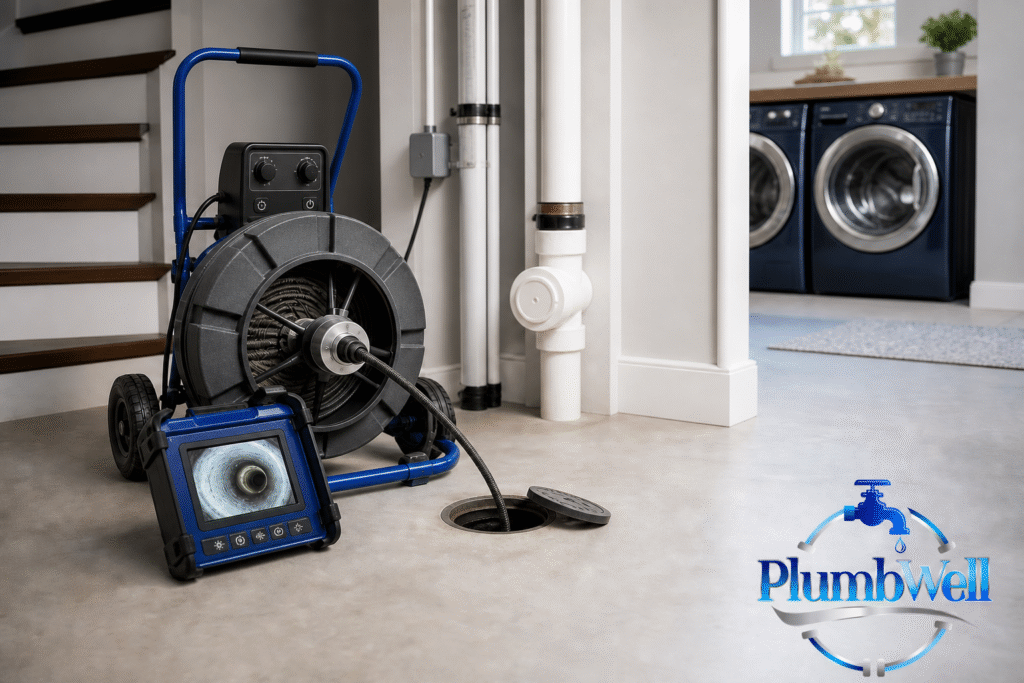
A slow drain may seem like a minor inconvenience, but it can also be the first warning that you need professional drain cleaning before a larger blockage develops inside your plumbing system.
If the same drain keeps clogging, several fixtures are draining slowly, or water is backing up into your home, the problem may be deeper than what a plunger can reach. Professional drain cleaning can locate the source of the problem and clear it without relying on guesswork.
Here are seven signs that it is time to call a professional.
1. The Same Drain Keeps Clogging
A clog that returns shortly after being cleared usually means some of the obstruction remains inside the pipe. A plunger or small household drain snake may create enough space for water to pass temporarily without removing the grease, hair, soap residue, or other material coating the pipe.
Recurring clogs can also indicate:
- A blockage located farther down the drain
- Heavy buildup along the pipe walls
- An incorrectly pitched or damaged pipe
- Tree-root intrusion
- Scaling inside an older cast-iron drain line
Repeatedly treating the symptom may provide temporary relief, but it does not identify why the clog keeps returning.
2. More Than One Drain Is Slow
One slow sink often points to a blockage near that particular fixture. Several slow drains can indicate a problem affecting a larger branch line or the home’s main sewer line.
Pay particular attention when:
- Multiple toilets flush slowly
- A bathtub and sink back up together
- Drains on the lowest floor are affected first
- Using one fixture causes water to appear in another
- Problems are occurring throughout the house
These symptoms should be evaluated promptly. A developing main-line blockage can eventually prevent wastewater from leaving the home. Learn more about main line backup service in New Jersey
3. You Hear Gurgling From Drains or Toilets
Drains should not regularly gurgle, bubble, or make gulping noises. These sounds can occur when trapped air is being pulled through water because a blockage is restricting normal flow. You may hear gurgling after flushing a toilet, running a washing machine, or emptying a sink.
One occasional sound does not necessarily mean the main sewer line is blocked. However, repeated gurgling—especially when combined with slow drainage or water appearing in another fixture—deserves professional attention.
4. Water Backs Up Through Another Fixture
Water moving in the wrong direction is one of the clearest signs of a drainage problem. Examples include:
- Flushing a toilet causes water to rise in the bathtub
- Running the washing machine makes a nearby drain overflow
- Emptying the kitchen sink produces bubbling in another fixture
- Water appears around a basement floor drain
- A lower-level shower fills when an upstairs fixture is used
These symptoms often indicate that wastewater has reached a blockage and is being forced toward another available opening. Stop using water when possible and arrange service before the backup spreads.
5. You Notice Persistent Drain or Sewer Odors
A persistent unpleasant smell coming from a drain can have several causes. A dry drain trap can allow sewer gas to enter the room, while decaying food, grease, or other organic material may create odors inside a kitchen drain. A damaged or obstructed sewer line can produce a more widespread problem.
If running water does not resolve the smell—or if the odor is accompanied by gurgling, slow drainage, or backups—the plumbing system should be inspected. Cleaning the visible drain opening may hide the smell temporarily without removing material farther inside the pipe.
6. Chemical Drain Cleaner Is Not Solving the Problem
Pouring more drain cleaner into a stubborn clog does not necessarily make it more effective. Chemical products may fail when the blockage is caused by a solid object, tree roots, heavy scale, a damaged pipe, or a problem deep inside the sewer line.
They can also leave caustic liquid sitting behind the obstruction, creating an additional hazard for anyone who later opens or services the drain. Always tell the plumber if a chemical product has already been poured into the line.
7. Your Older Drain Lines Keep Developing Problems
Older New Jersey homes may contain cast iron, galvanized steel, clay, or other aging drain materials. The inside of these pipes can become rough because of corrosion, mineral buildup, or scale. That rough surface catches waste more easily and gradually reduces the opening available for water to pass through.
When the pipe’s condition allows it, a plumber may recommend sewer line descaling
If an inspection reveals cracking, collapse, severe corrosion, or another structural failure, cleaning alone may not provide a lasting solution. In those cases, sewer-line replacement may need to be considered.
How Professional Drain Cleaning Works
Professional drain cleaning begins by evaluating the symptoms and determining which part of the plumbing system is affected. A plumber may ask which fixtures are slow, when the problem began, whether the clog has happened before, and whether a chemical cleaner has been used.
The correct method depends on the location of the clog, the material inside the line, and the pipe’s overall condition.
Professional Drain Snaking
A professional drain snake uses a flexible cable and an appropriate cutting or retrieval head to reach obstructions inside the pipe. Snaking can be effective for localized clogs involving hair, paper, or other concentrated material. However, it may not completely clean grease or scale from the pipe walls.
Sewer Camera Inspection
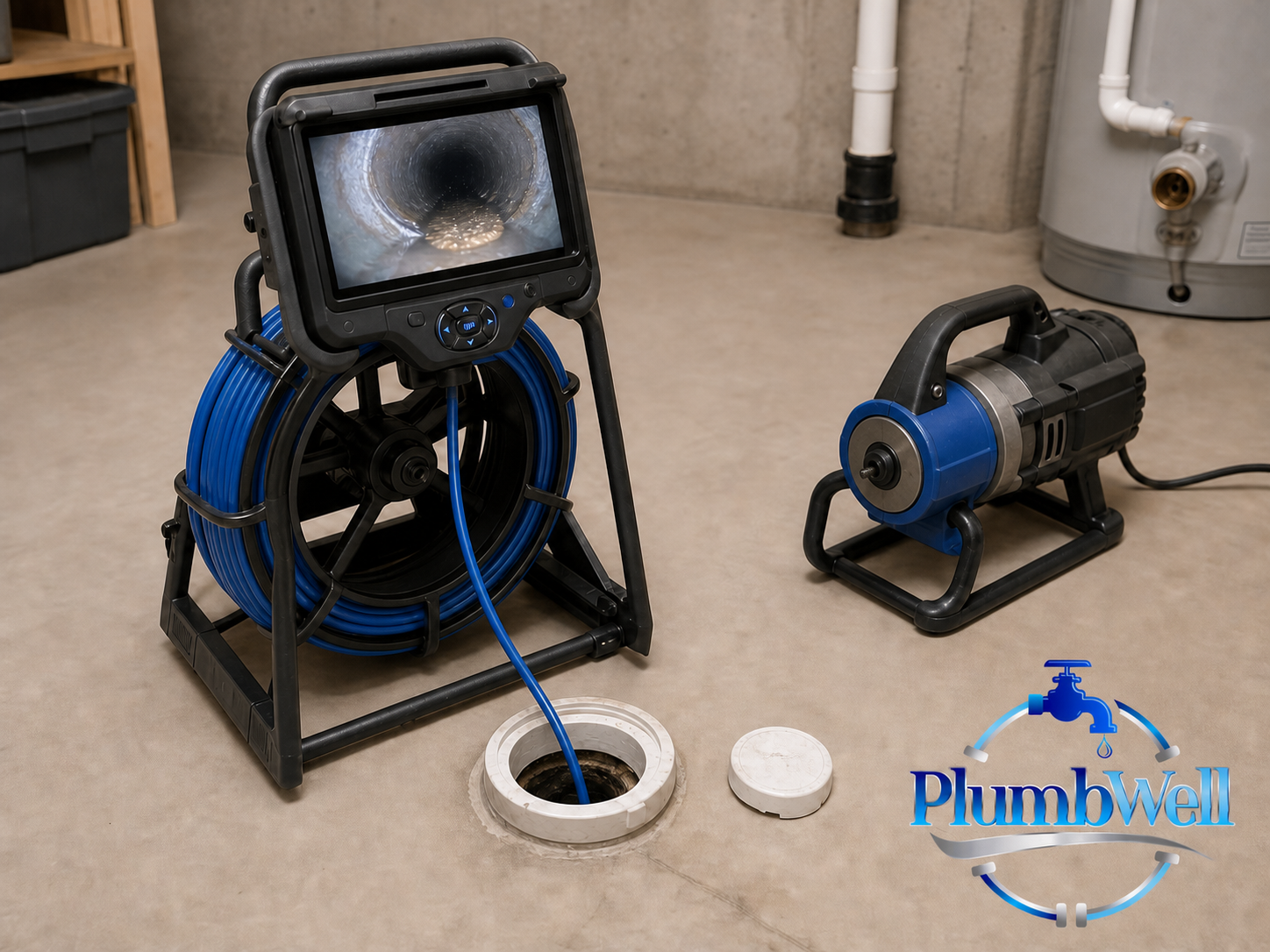
For a recurring or difficult problem, a sewer camera can help identify what is happening inside an accessible line. An inspection may reveal roots, heavy buildup, corrosion, broken pipe sections, or an obstruction located farther down the system.
Hydro Jetting
Hydro jetting uses high-pressure water to remove grease, sludge, mineral deposits, and other buildup from the inside of drain and sewer lines. Unlike a basic snake that creates a path through a blockage, hydro jetting can clean a larger portion of the pipe wall.
The water pressure and equipment must be selected according to the line’s material and condition, so an inspection may be recommended first for older or damaged pipes.
When a Clogged Drain Becomes an Emergency
Call for immediate help if:
- Sewage is entering the home
- Water is overflowing and cannot be stopped
- Several fixtures suddenly back up
- A basement drain is releasing wastewater
- The blockage prevents the home’s toilets from being used
- The backup is creating a risk of property damage
Limit water use while waiting for assistance. Do not continue flushing toilets or running appliances if doing so causes the backup to worsen.
An active backup requires immediate attention. Learn when to call for emergency plumbing service
How to Reduce Future Drain Clogs
A few household habits can reduce the amount of material entering your drains:
- Allow cooking grease to cool and place it in the trash instead of the sink.
- Wipe greasy pans before washing them.
- Use drain strainers to catch food and hair.
- Flush only toilet paper and human waste.
- Put wipes in the trash, including products labeled “flushable.”
- Avoid putting coffee grounds, eggshells, and fibrous foods into the garbage disposal.
- Address recurring slow drains instead of waiting for a complete blockage.
There is no universal schedule for professional drain cleaning. The appropriate timing depends on the home’s pipe material, age, previous problems, and how the plumbing system is used.
Schedule Professional Drain Cleaning in New Jersey
A slow drain is easier to address before it becomes a complete blockage or sewage backup. PlumbWell can diagnose recurring clogs, clean drain and sewer lines, and determine whether buildup, roots, scaling, or damaged piping is causing the problem.
For professional drain cleaning in Northern New Jersey, call 201-551-9463 or book your appointment online.
Frequently Asked Questions
When should I call a plumber for a clogged drain?
Call when the clog repeatedly returns, several fixtures are affected, water backs up through another drain, or ordinary plunging does not resolve the problem.
Does a slow drain mean the main sewer line is clogged?
Not always. One slow fixture usually indicates a localized problem. Several slow drains, lower-level backups, or water moving between fixtures may point to a main-line obstruction.
Is hydro jetting safe for every pipe?
No single drain-cleaning method is appropriate for every pipe. A plumber should consider the line’s material and condition before selecting the water pressure and equipment.
What should I do if sewage is backing up?
Stop using toilets, sinks, washing machines, and other water-using fixtures when possible. Keep people and pets away from the affected area and call for emergency plumbing service.
How often should residential drains be professionally cleaned?
There is no fixed schedule that applies to every home. Recurring problems, older pipe materials, grease buildup, or a history of main-line backups may justify preventive inspection or cleaning.